18 OCT 2026 · From the Workshop
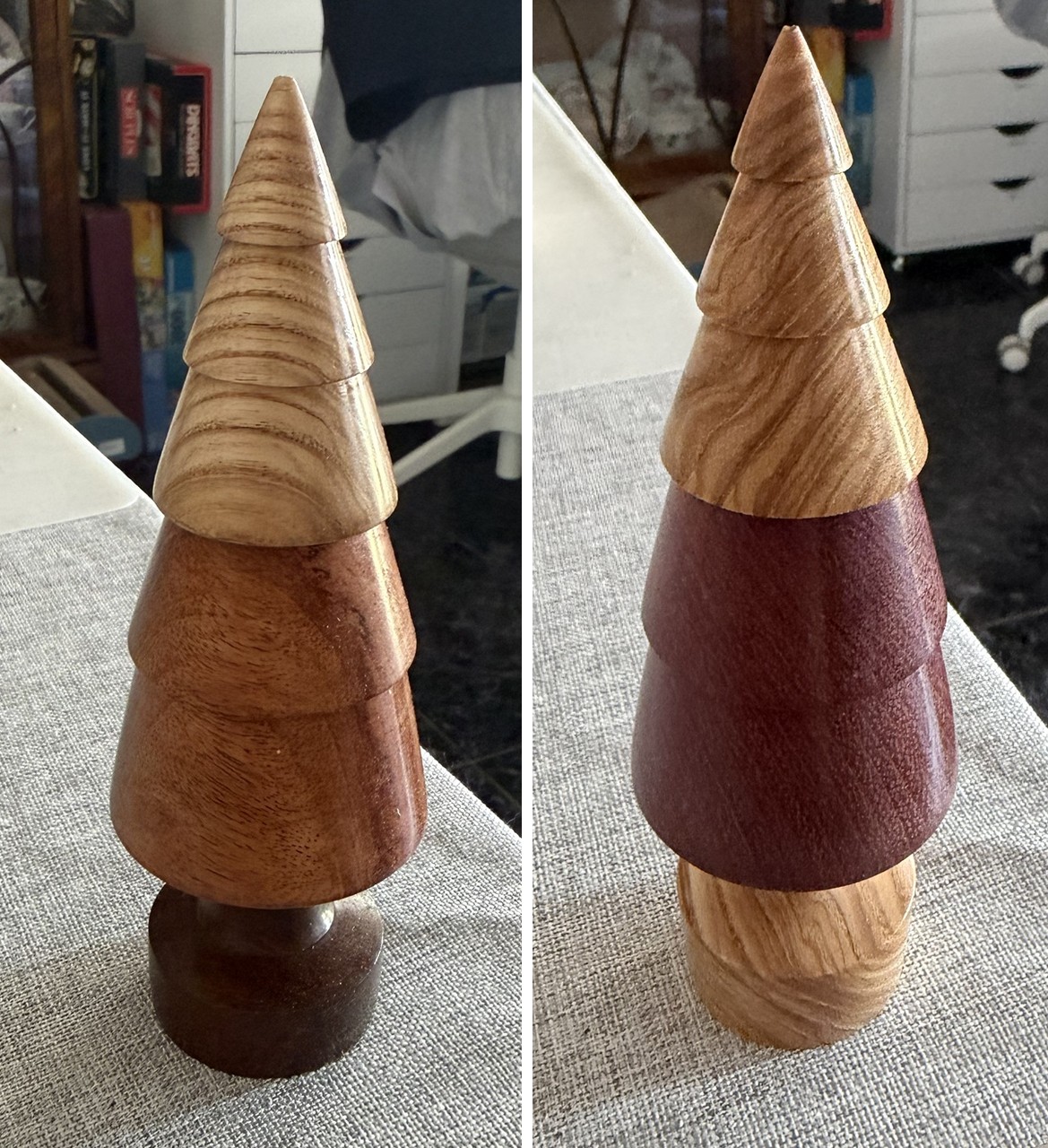
Three Woods, One Tree
Just over a week ago a batch of spindle blanks arrived from Dalmann UK: a mixture of domestic and exotic woods. In the box was a wood I’ve wanted to turn for a while but never had: purpleheart. I also managed to get a couple of monkey puzzle blanks and some ash in the order.
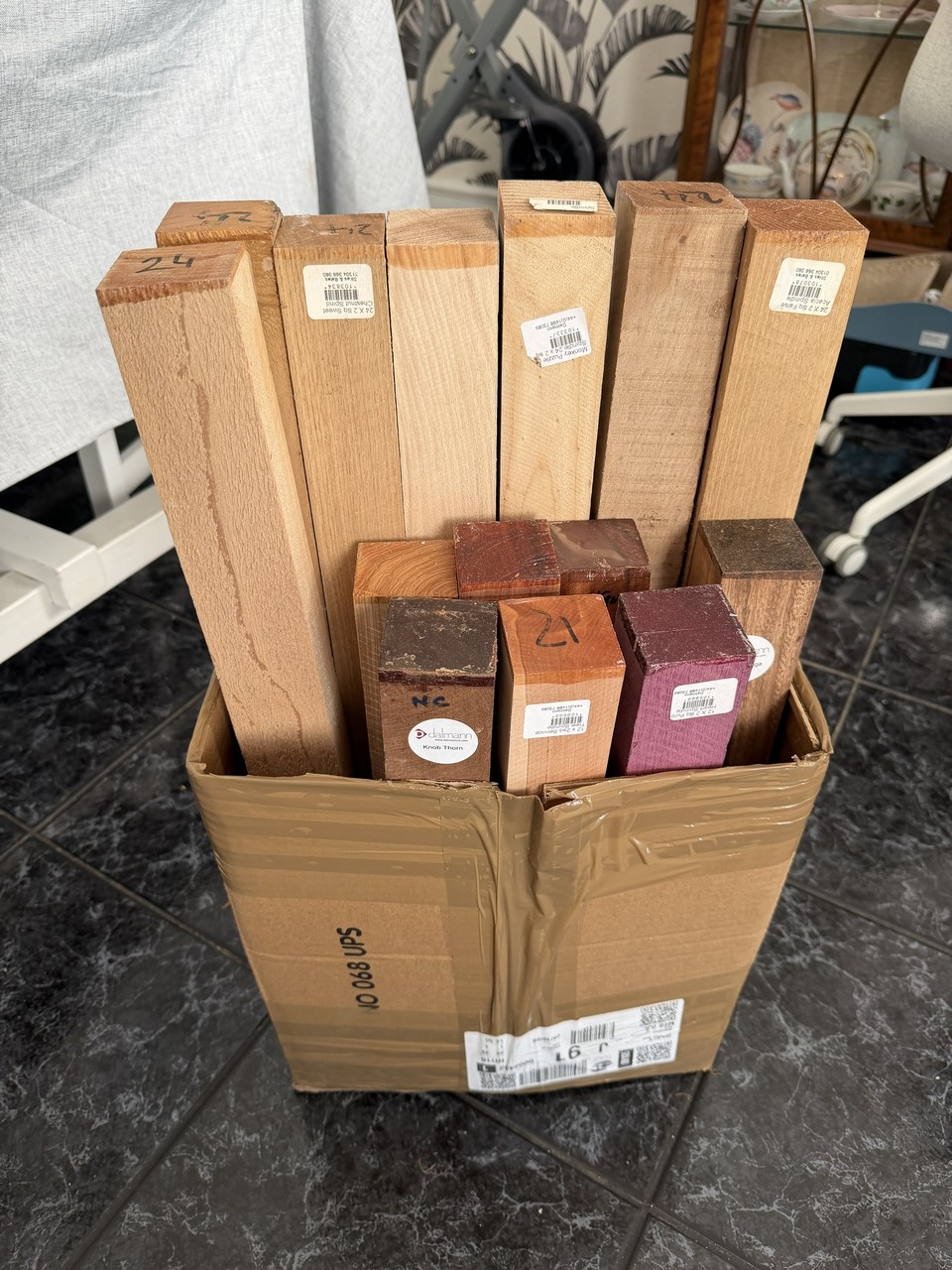
Gluing blanks together to create interesting colour and texture combinations is a technique I’ve fancied trying for a little while, and this was the ideal chance. There was one catch, though: I don’t have a planer (or jointer, as our cousins over the pond would call it) in my workshop yet. Fortunately the blanks arrived with two opposite faces planed and two sawn, which was exactly the trigger I needed.
I decided to try two combinations: ash, purpleheart and ash as a sandwich, and knob thorn, African rosewood and ash as a gradient. Purpleheart has a reputation for being hard, but the batch from Dalmann seemed to be a similar hardness to their ash.
After cutting the blanks down to 6” lengths I checked the flatness of the planed faces. They were pretty good, but to be safe I sanded them with 120 grit as well (going finer is apparently counter-productive). One of the ash pieces didn’t have completely parallel planed faces, but the sanding proved effective. I cleaned the knob thorn and purpleheart faces with acetone, glued everything with PVA, and gave both blocks just over 24 hours to set.
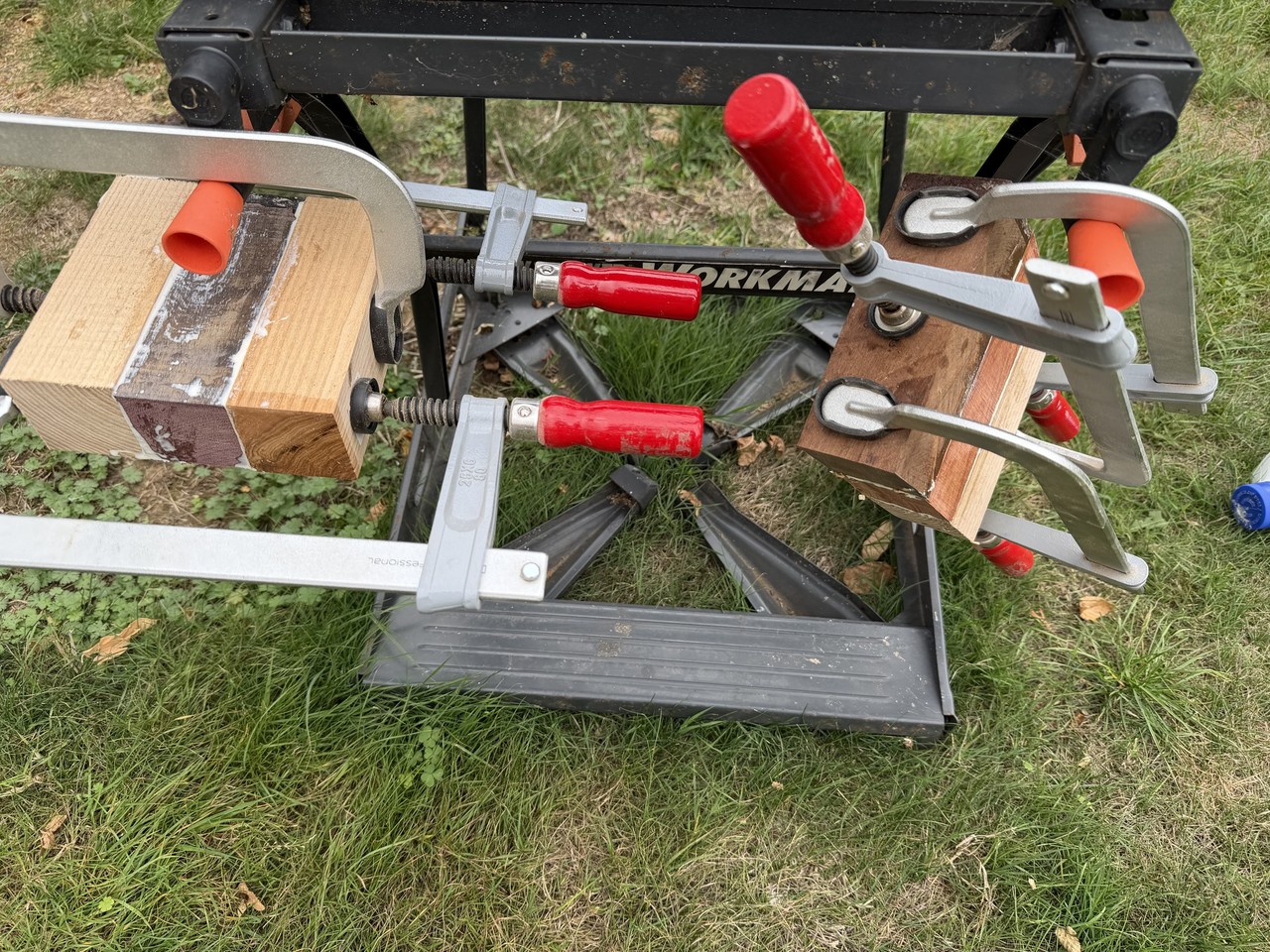
The two resulting blocks, roughly 6” x 6” x 2”, were heavy.
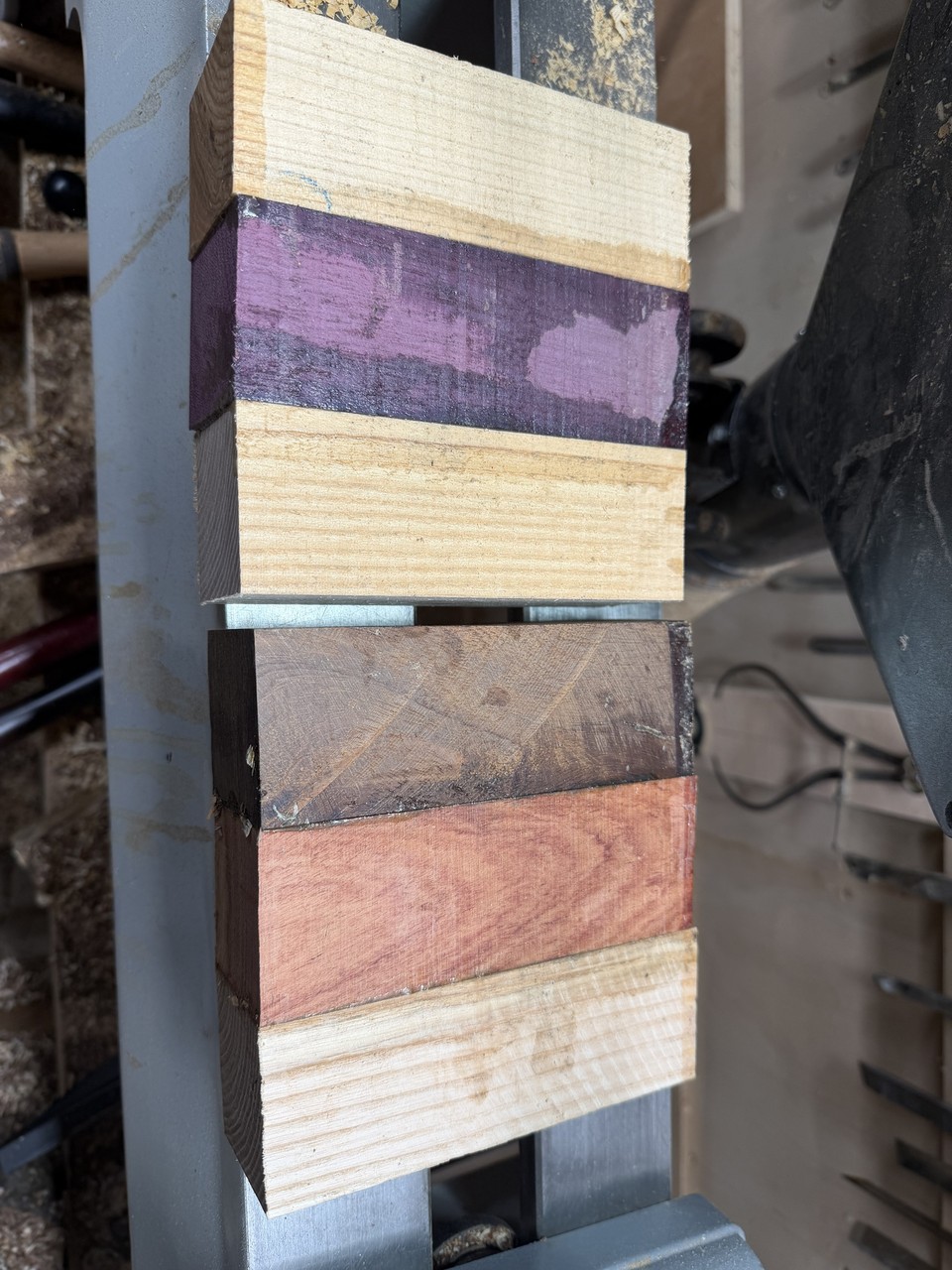
I then ran them through the bandsaw at right angles to the joins to create six blanks of 6” x 2” x 2” (or so).
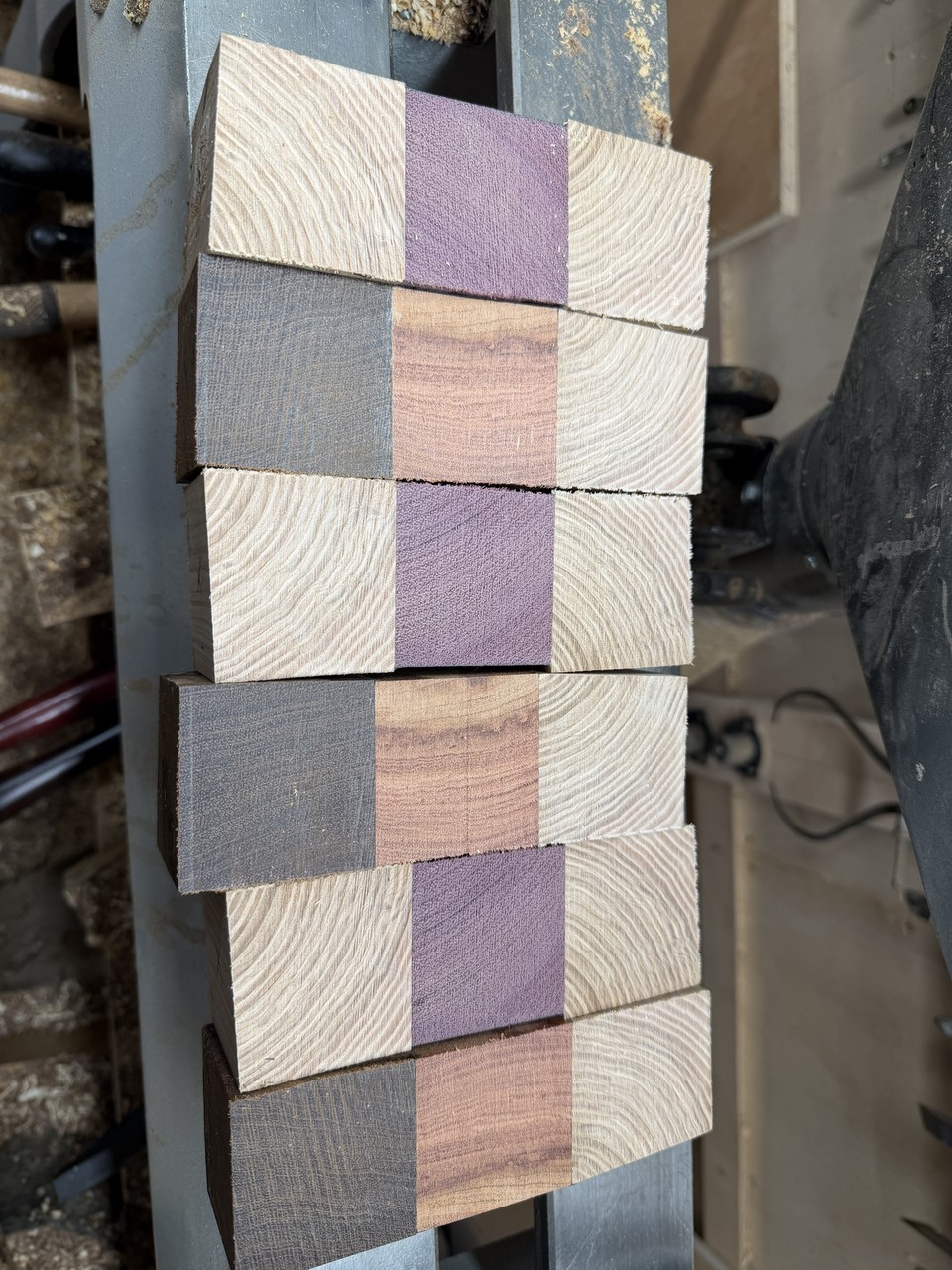
Aside from the hardness of the wood, one other consequence of this approach is that the grain runs across each blank rather than along it, so turning them was more like turning a bowl. That meant a lot of patience, particularly on the first blank I tried, as it turns out knob thorn is apparently harder than diamond.
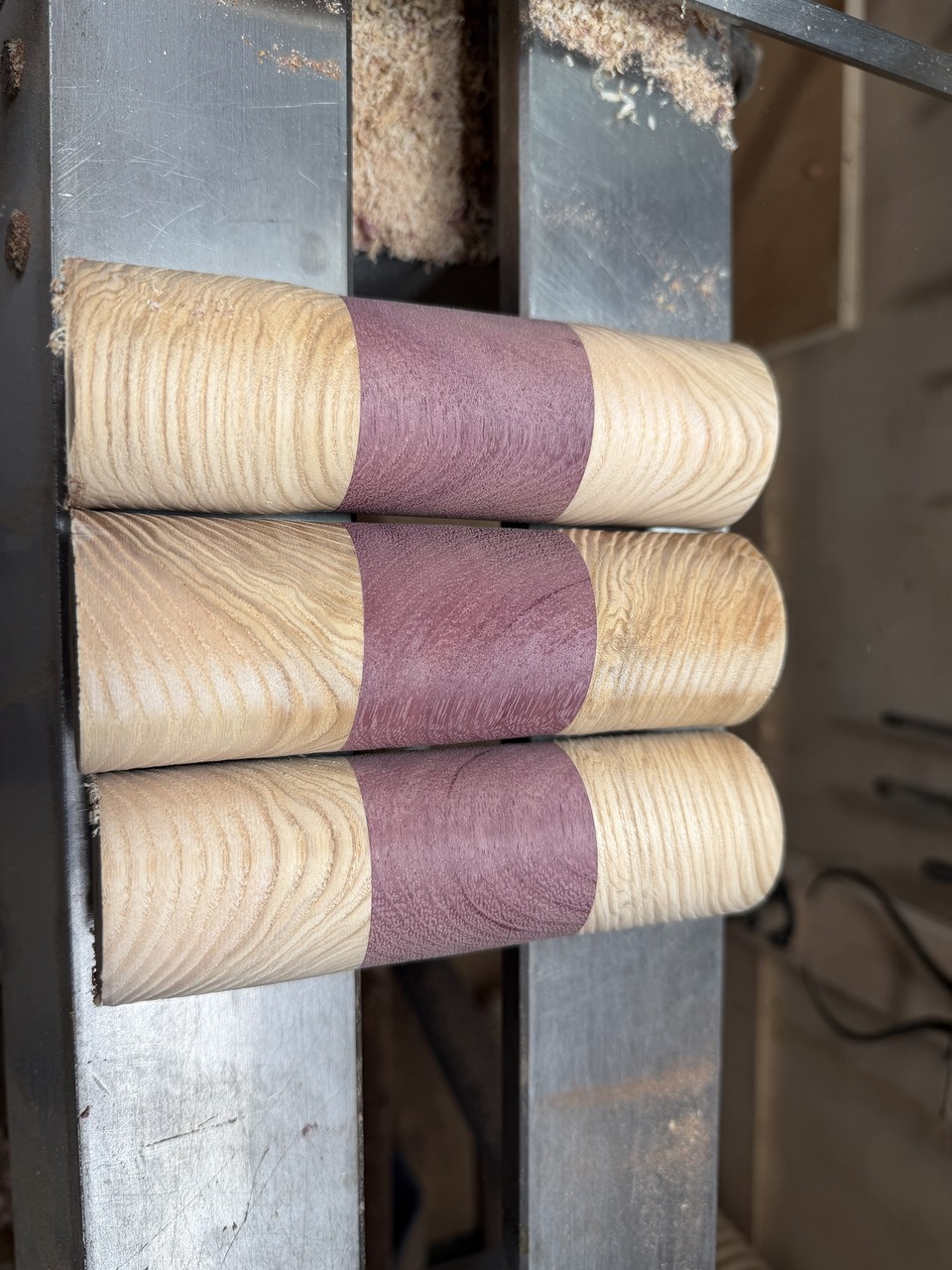
That first prototype also taught me a valuable lesson: be careful where you put the joints. I cleverly lined up the knob thorn and rosewood joint with a narrow trunk, with the much larger spinning tree on the wrong side of it. Miraculously the blank held together right up to the point I started finishing the tree, and because it broke cleanly, I was able to salvage it with some CA glue.
Lesson learned, I thought. Prototype number two (ash, purpleheart and ash) had a nice thick joint between the base and the middle, but I later realised (or more precisely, my wife pointed out) that the colour switching mid-bough didn’t look so good.
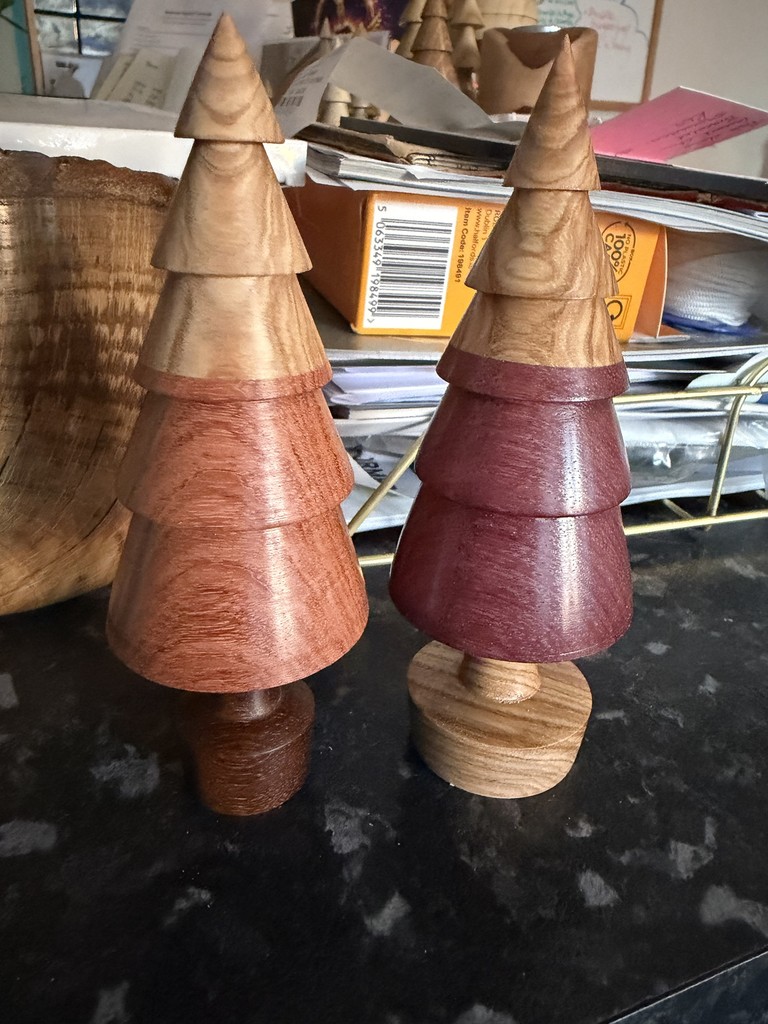
So on Saturday morning, attempt three went on the lathe. This time I carefully lined the lower branches up with the lower ash and purpleheart join, and the upper three branches with the upper purpleheart and ash join. Reluctantly I have to admit my wife was right: putting the glue joint between the branches was definitely the right choice.
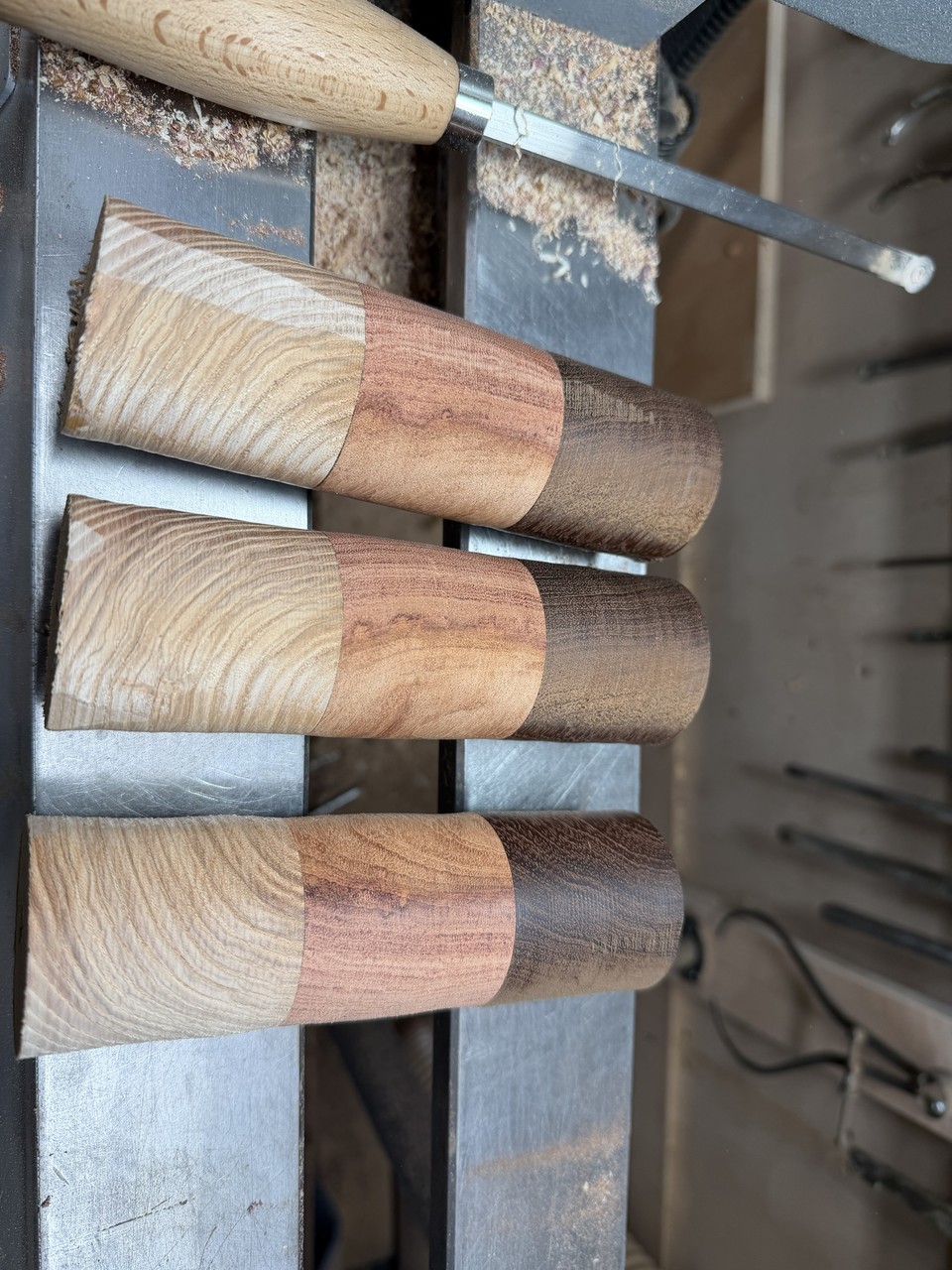
Next was the second knob thorn, rosewood and ash blank, and this time I went for a much thicker trunk and bucket. In my defence, the first prototype didn’t have a thin bucket by choice: a catch took a chunk out of the base, and that was a lesson in hardness and brittleness learned. Again the finished tree looked much better with nicely aligned colour changes, much to my wife’s credit!
The hardness and the bowl-style turning meant trees three and four took over an hour apiece, and it was hard work. That became all the more obvious when I switched to a pair of yew blanks that were already turned round. Yew isn’t the softest of woods, but after ash, purpleheart and my new nemesis, knob thorn, it felt like turning cherry.
I finished off by turning a couple of pens destined to be gifts, but I definitely felt like I’d been turning for a few hours.
So, lots of lessons learned and a few nice pieces as a result: the ash and purpleheart trees, the knob thorn, rosewood and ash tree and the yew trees are all in the collection now. Roll on the exhibition in a couple of weeks!
One question before I go: compare the prototypes with trees three and four. Do you agree with my wife that the colour joins look best between the branches?
Comments
Thanks, your comment is now live.
Thanks for confirming. Your comment contains a link, so it will appear once it's been approved.
No comments yet. Be the first!