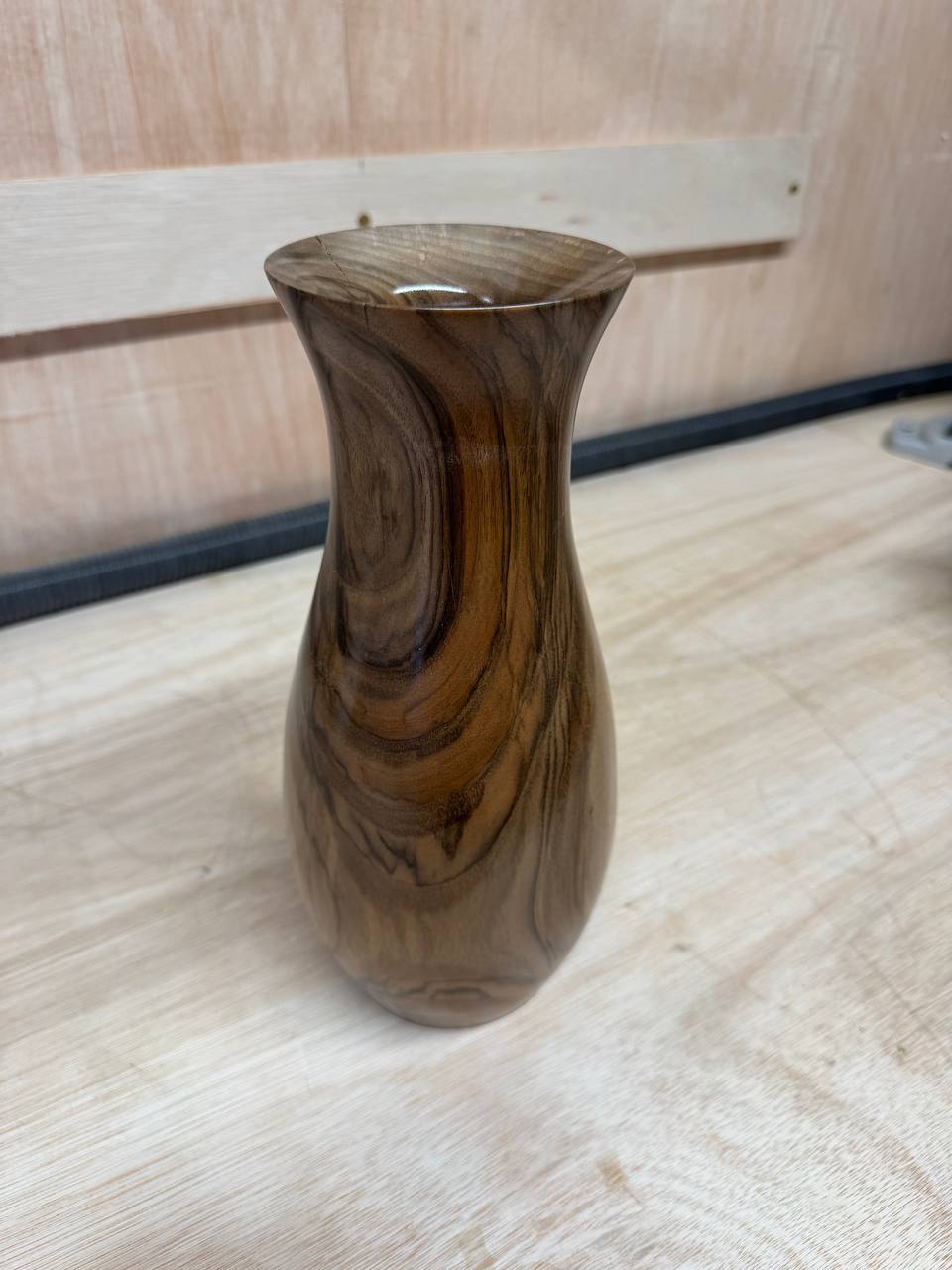
Walnut Vase
CAN005
SOLD
My first attempt at a walnut vase, and what a wood to start with. This piece was acquired from Ian Pope, who sourced it many years ago, so it was very well seasoned by the time it reached the lathe.
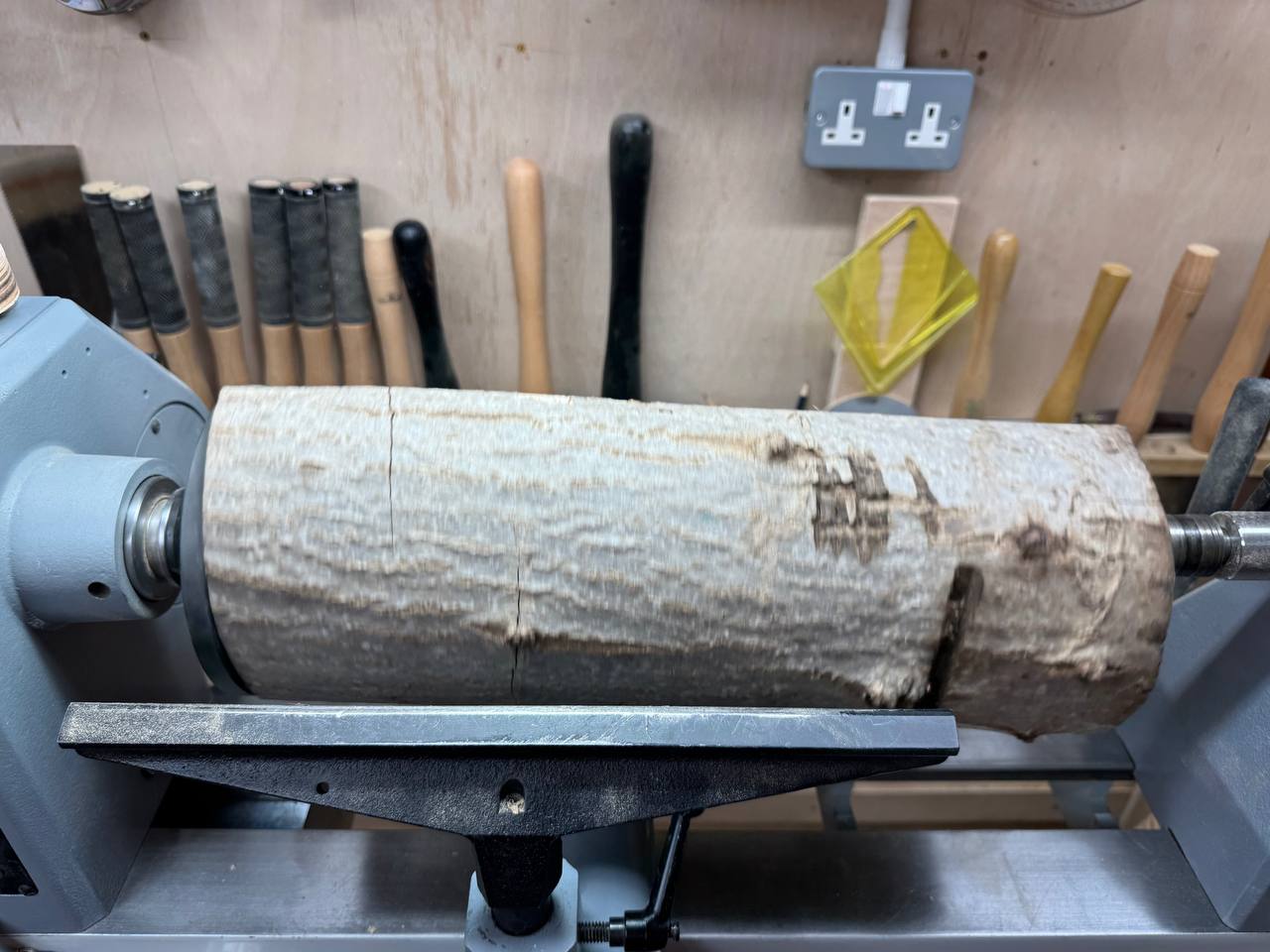
The section of branch was a little uneven, which made getting started hard work - the bark was rough and the blank wobbled until it found its centre. Once past that initial roughing though, walnut proved to be a pleasure to turn.
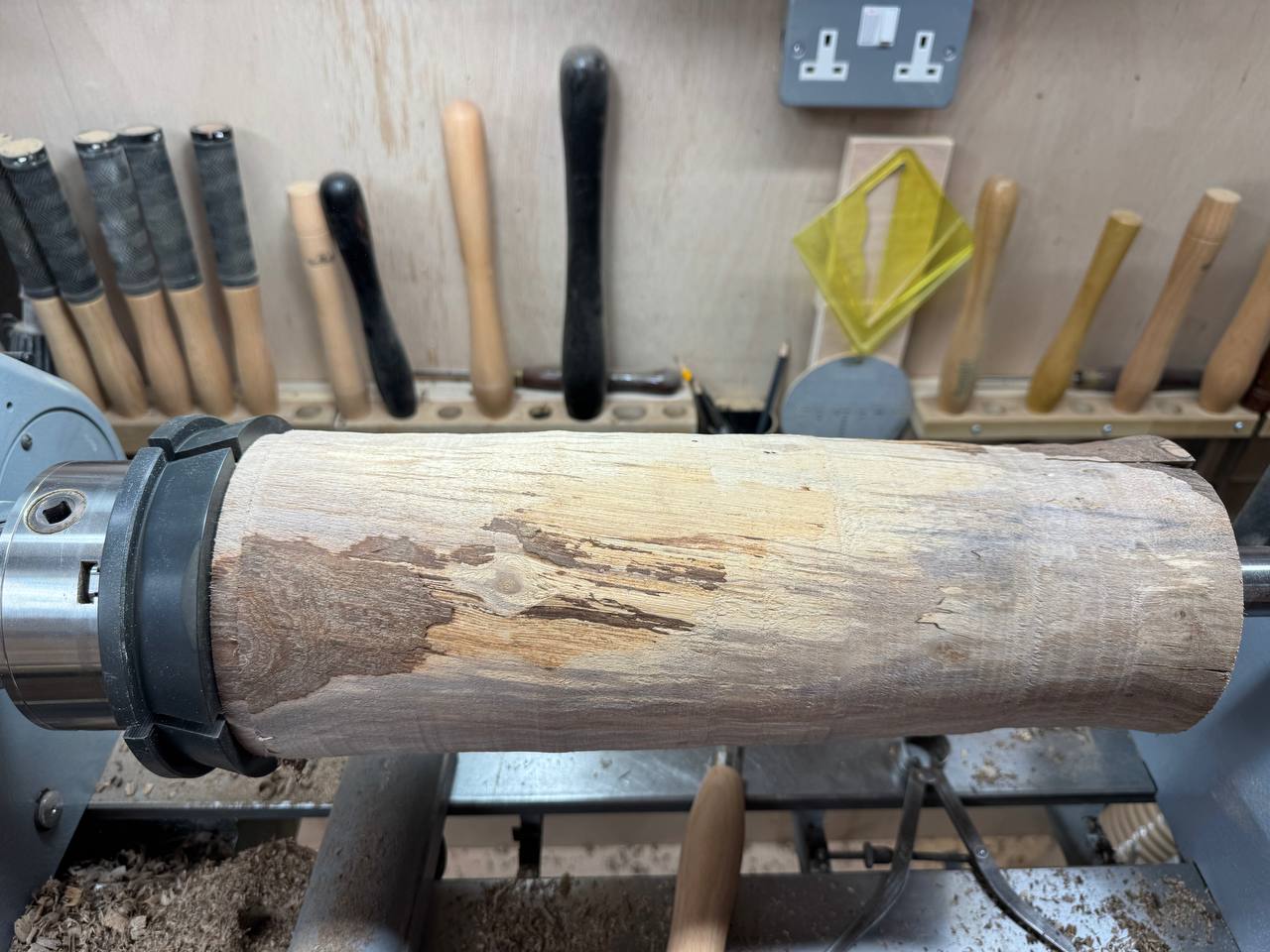
As the bark came away, patches of spalting emerged - dark lines running through the lighter sapwood where fungi had begun to work the timber. Rather than turning it away, I kept as much as possible, letting the natural markings become a feature of the finished piece.
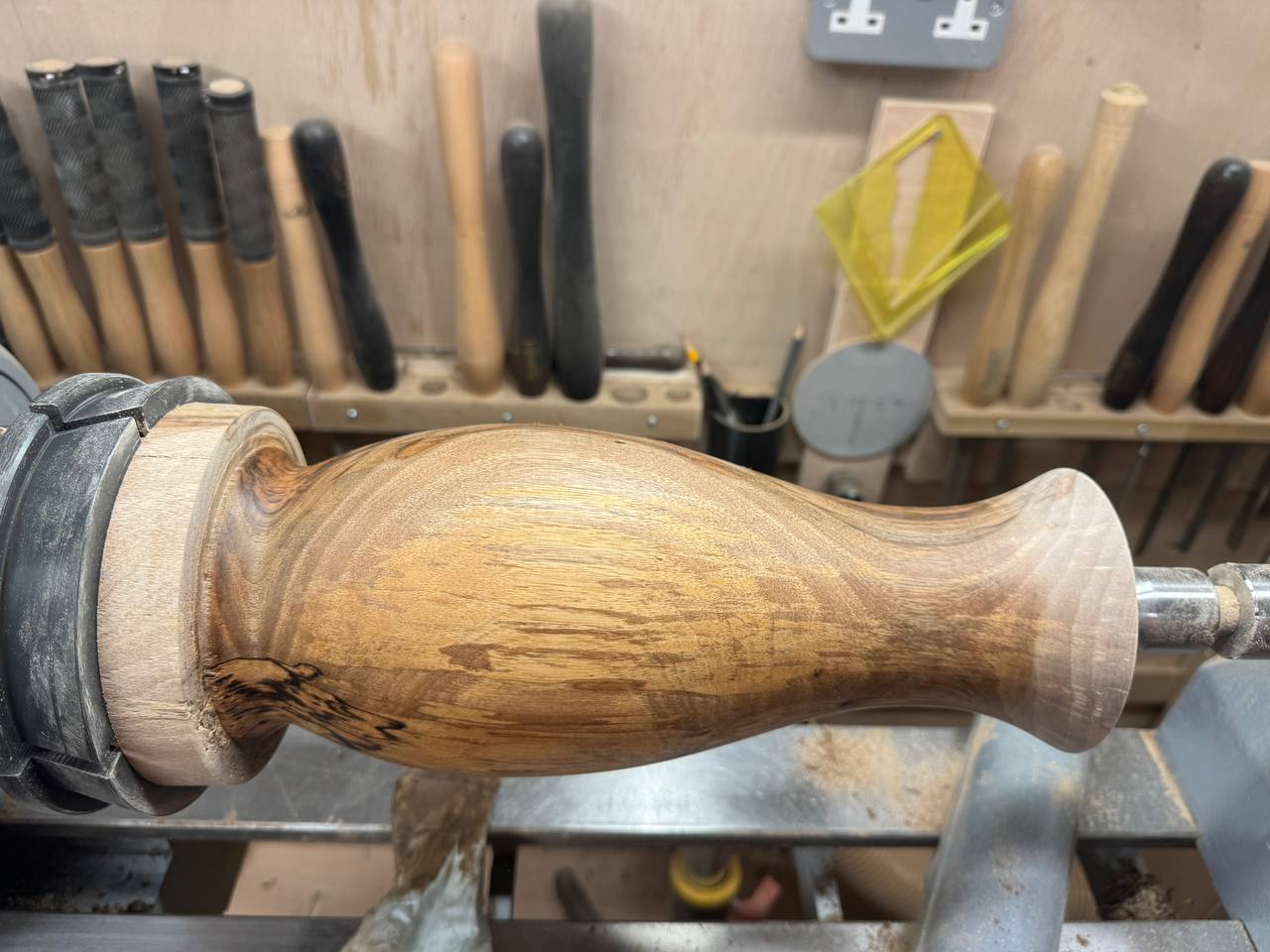
The classic vase profile emerged nicely - a generous belly narrowing to a waist before flaring out at the rim. The grain swirls around the curves in a way that only becomes apparent once you start shaping.
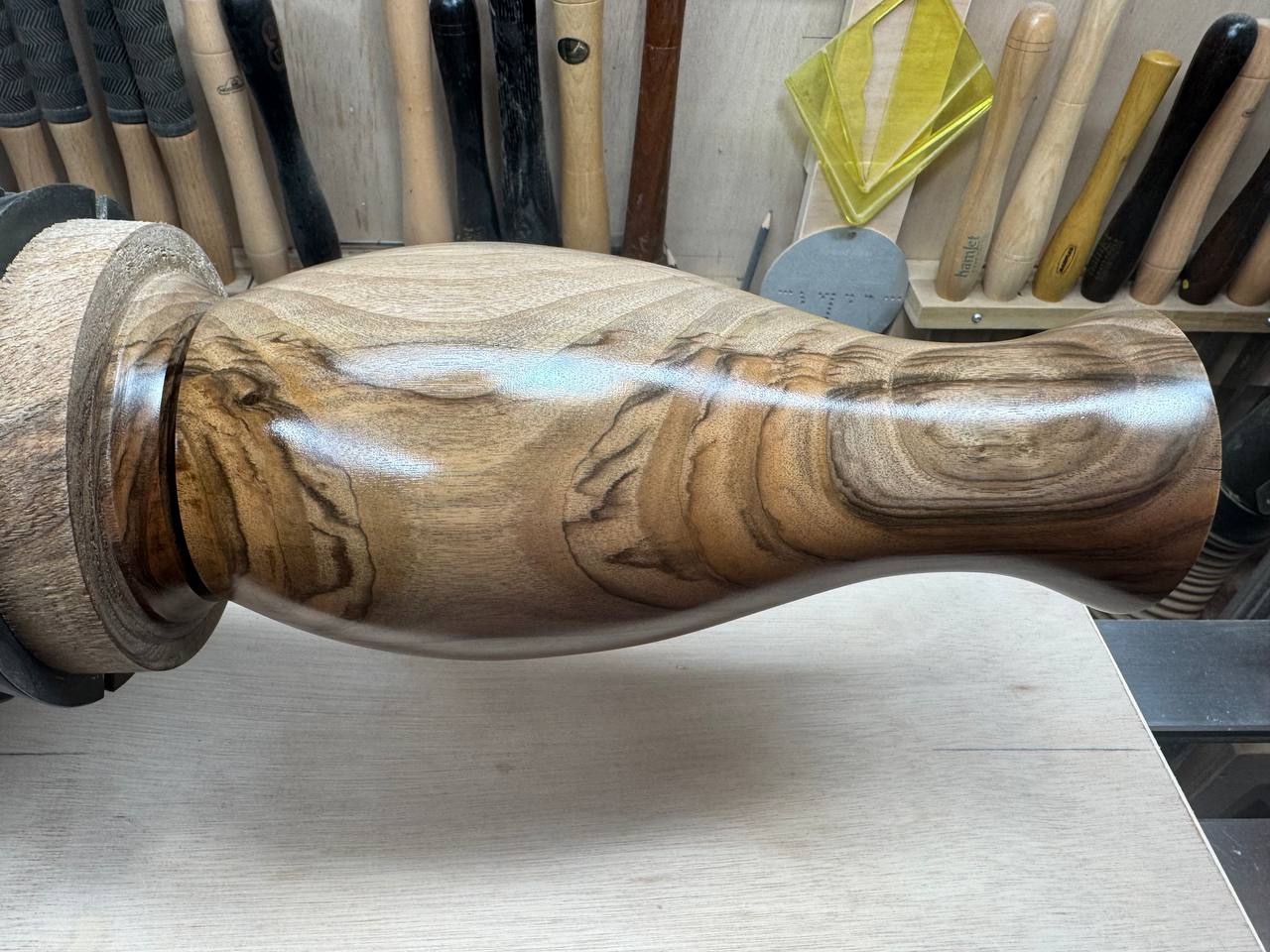
The melamine lacquer transforms the walnut - rich chocolate and amber tones come alive, and the swirling grain patterns seem to shift as you move around the piece. The spalting adds character, with dark veins running like ink through the lighter wood.
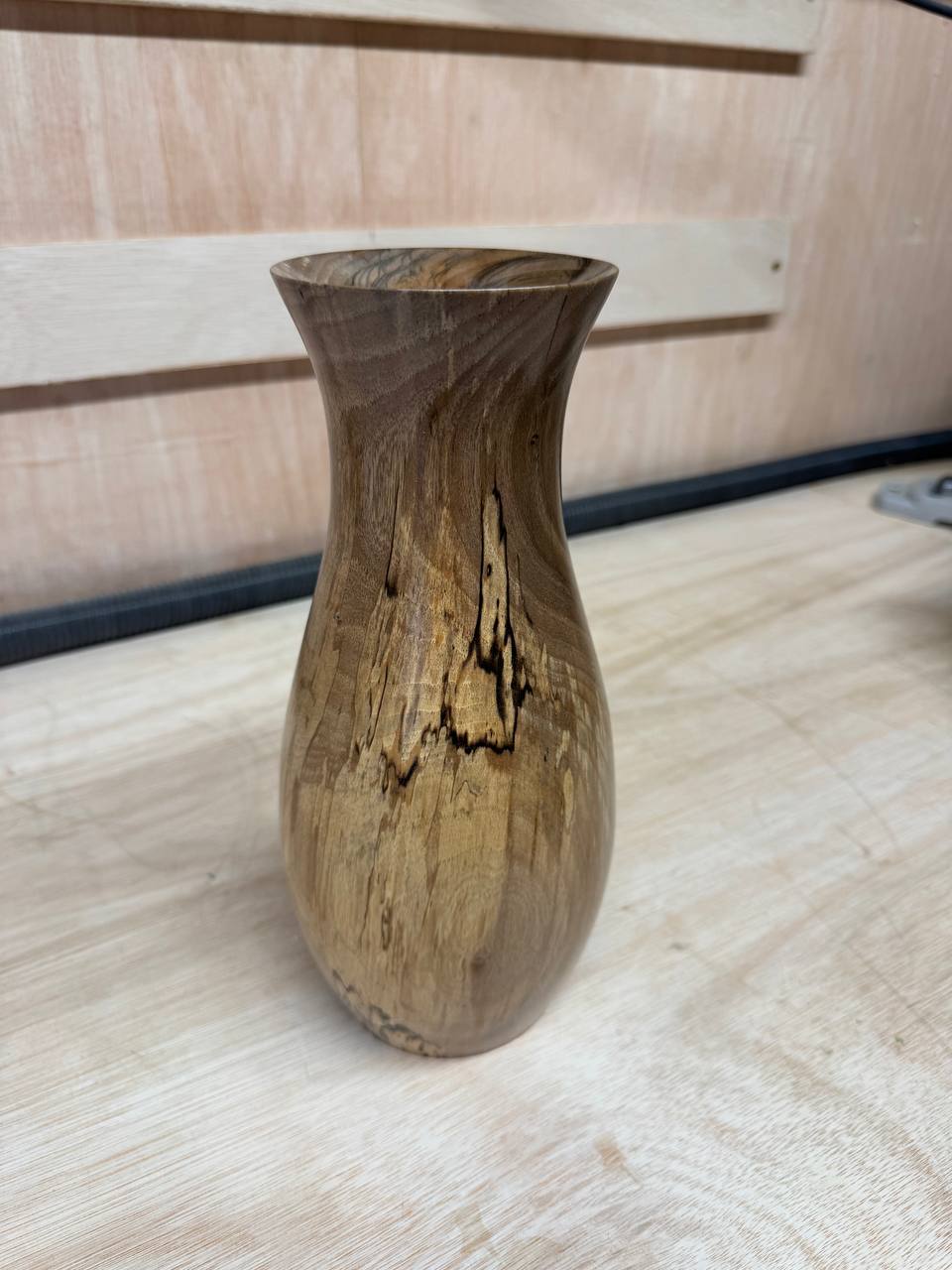
It is worth a word on what gives walnut its looks. The rich chocolate-brown we think of as “walnut” is the heartwood - the older, inner wood at the core of the tree, where the living cells have shut down and filled with the natural compounds that darken and toughen it. Wrapped around that is the sapwood, the younger outer layer that still carries water up the tree as it grows, and it stays far paler - a creamy honey colour. Walnut draws the line between the two more boldly than most timbers, which is why this vase reads almost as two woods in one.
How much that contrast shows varies enormously from tree to tree. Yew is another show-off - a fiery orange heart against cream sapwood - while woods like beech and sycamore barely tell the two apart at all. And the dark lines threading through the pale sapwood here are a third thing again: not heartwood, but spalting - the fine boundary lines fungi draw as they start to break the wood down, caught and preserved at just the right moment.
I have another couple of pieces from the same tree, so watch this space.